Triglav National Park sits in the north-west corner of Slovenia, along the borders with Italy and Austria. It covers a large part of the Julian Alps and is named after Mount Triglav, the country’s highest peak.
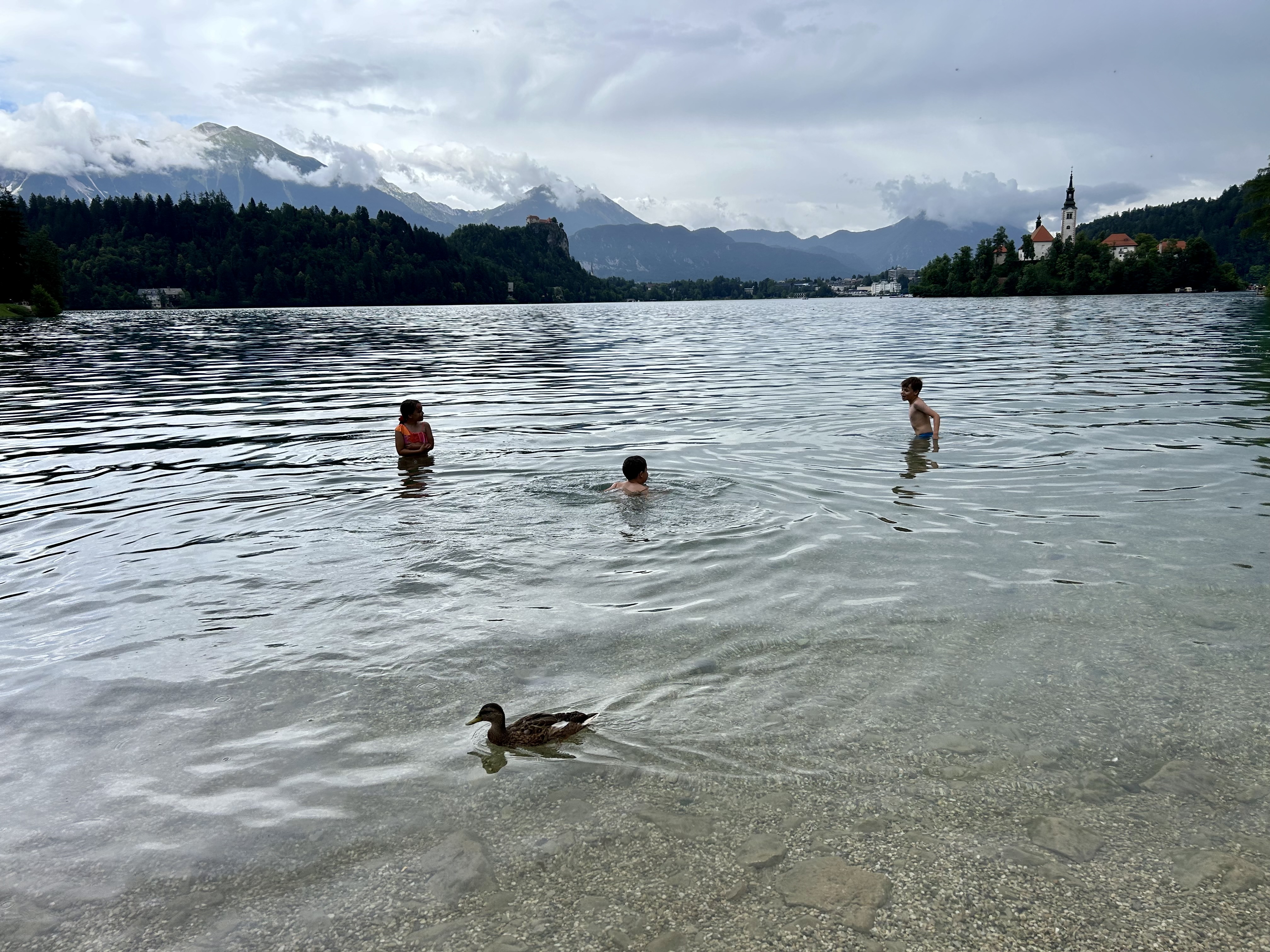
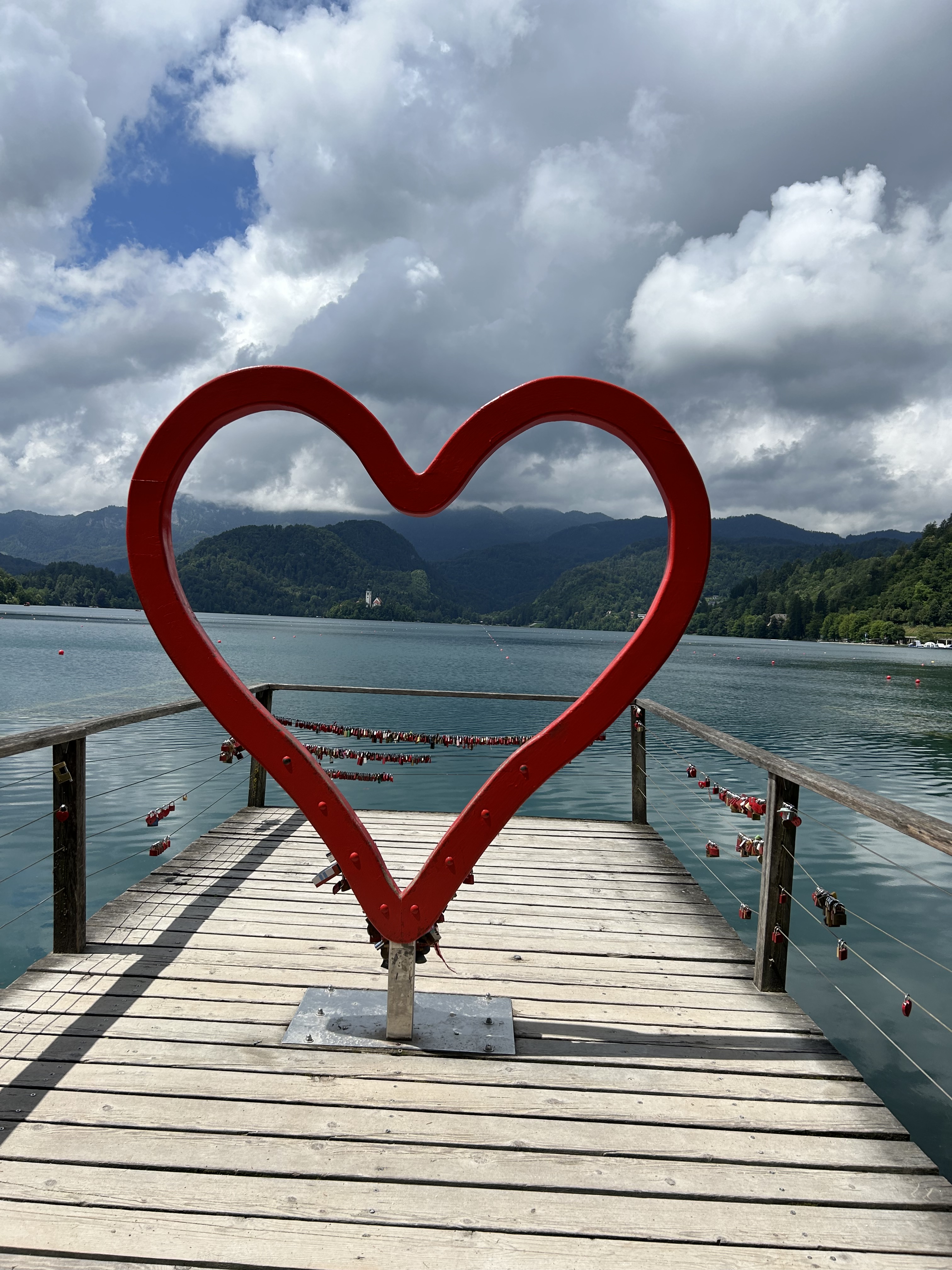
First stop is Lake Bled. a path follows the shoreline. the small island church sitting in the middle of the water. It isn’t high season. Slovenia in general feels quiet, but here there is still a clear tourist setup. Hotels, cafés and viewpoints ready for busy days. It feels a little staged.
But a swim in the lake is fresh.
From Bled the road continues north toward Kranjska Gora.
The key is hanging on the door when we arrive. Slovenia quickly gives a feeling of trust.
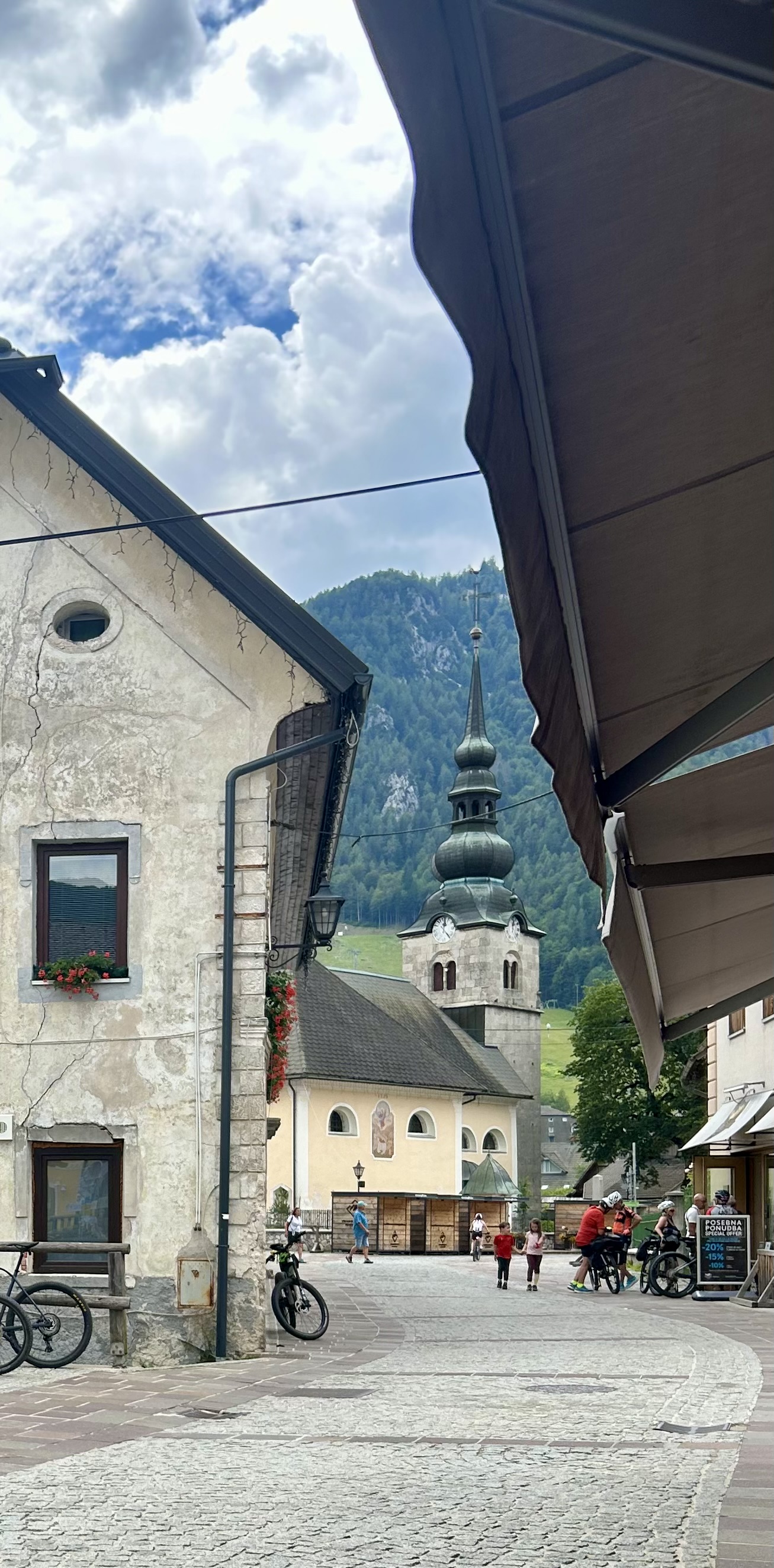
Kranjska Gora is also a sporty place. In winter it’s a ski resort. In summer the same terrain fills with cyclists, hikers and runners. Trails start right from the village. Bike paths run through the valley toward Italy and Austria. The mountains are close in every direction.
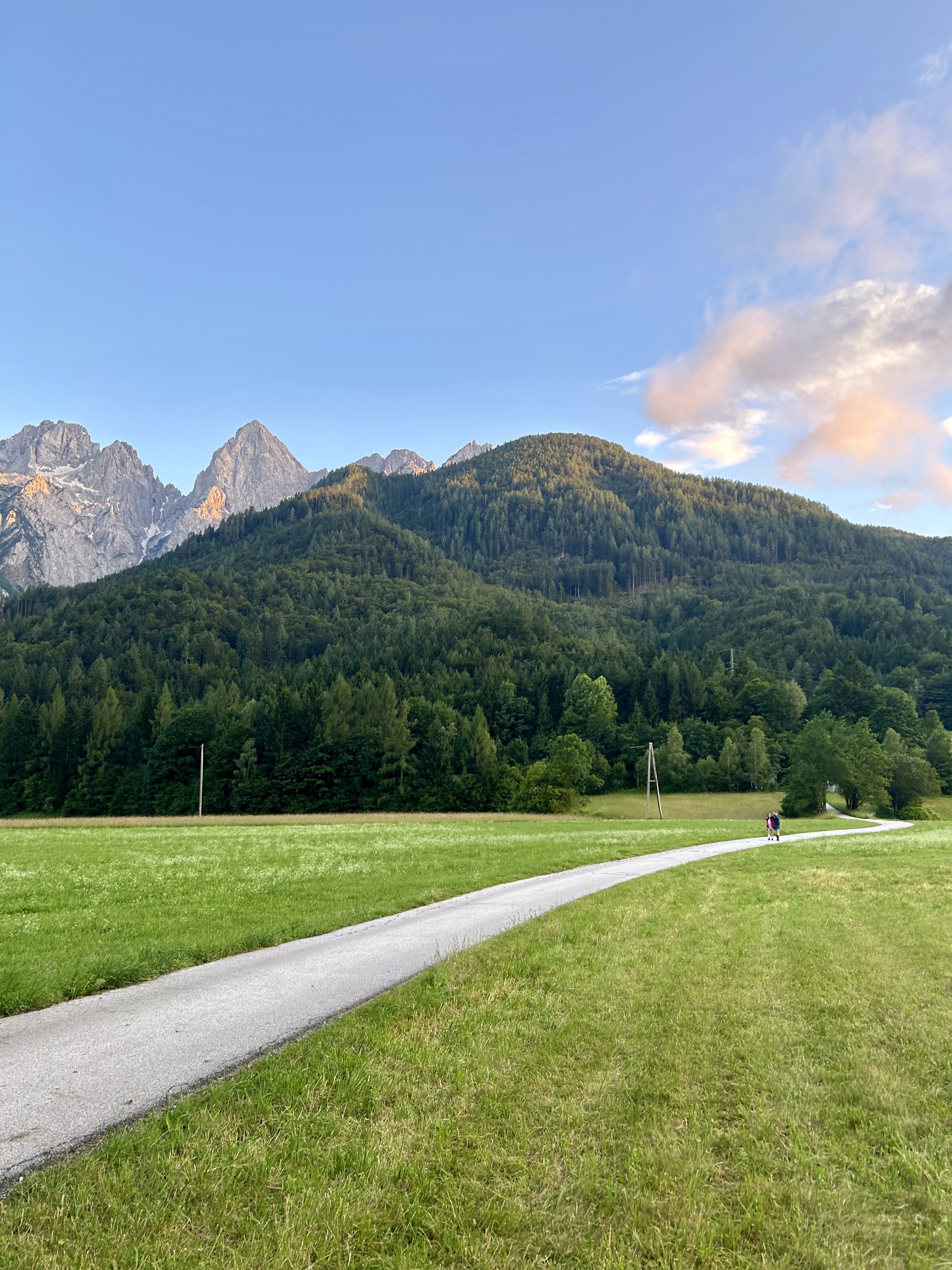
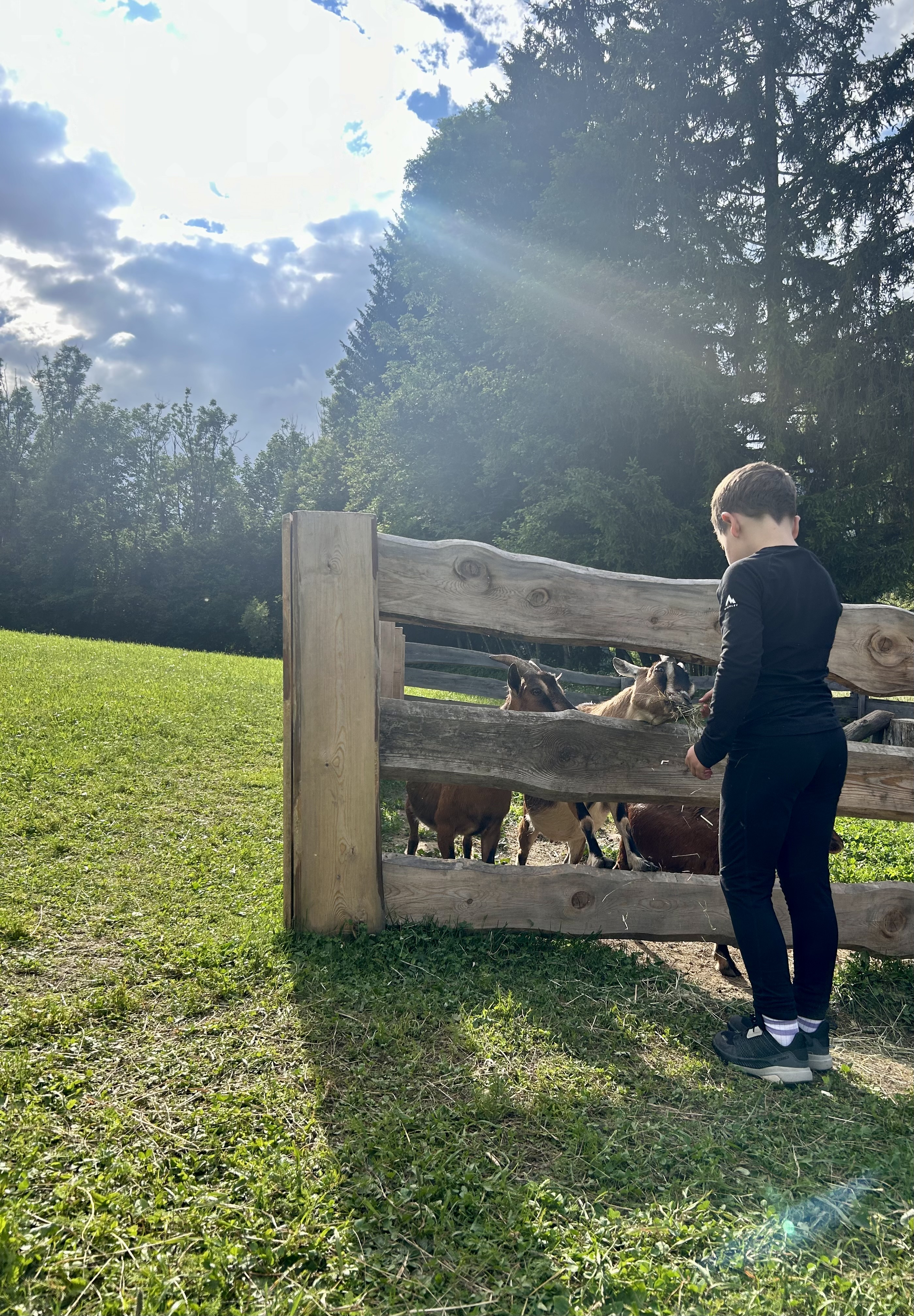
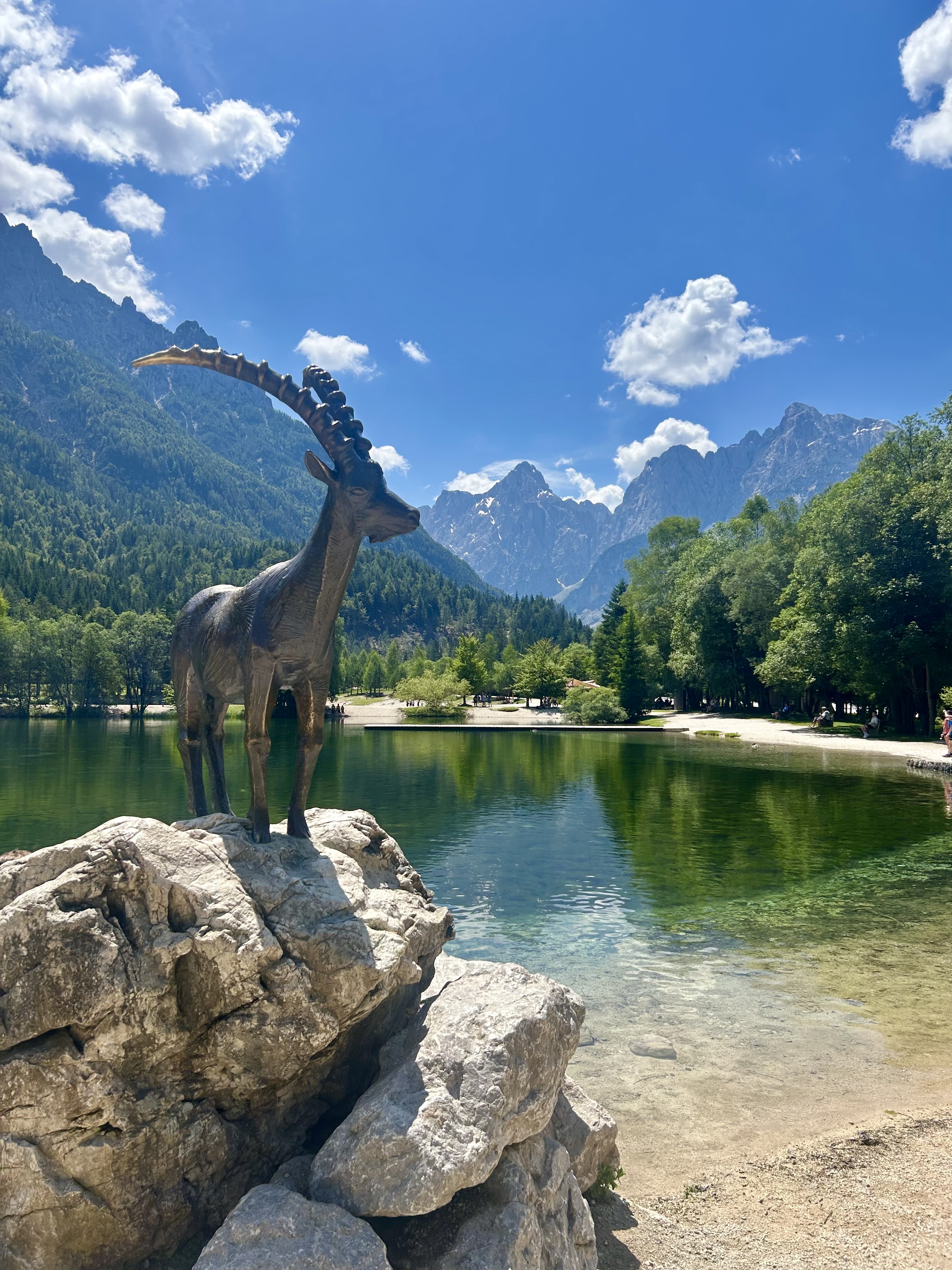
A short ride from the village lies Lake Jasna.
Clear, cold alpine water. The bottom is easy to see through the clear water. Fish move slowly between the stones. The stream from the mountains runs down the valley beside it, over rocks and gravel.
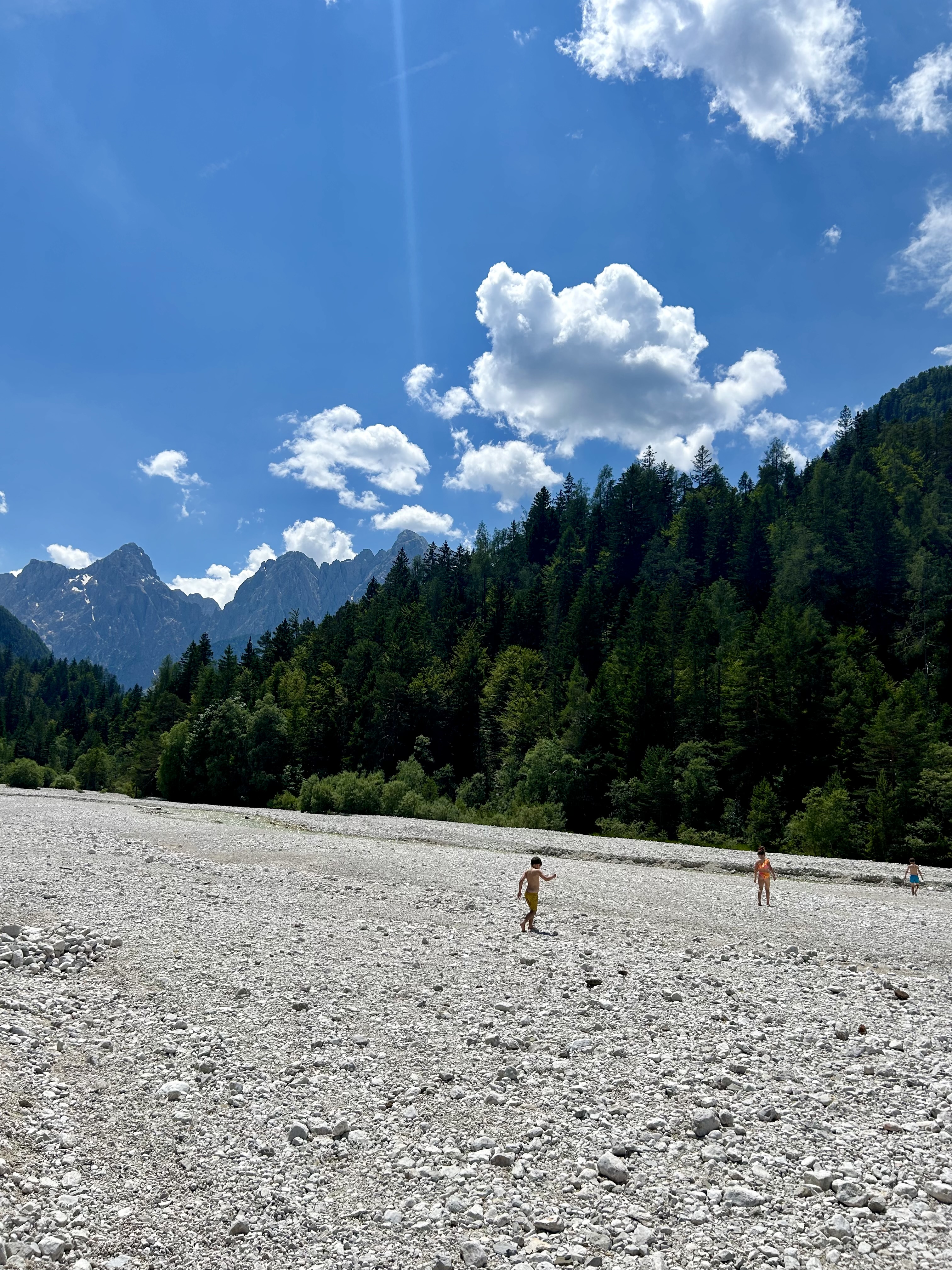
From Kranjska Gora we cycle through the valley.
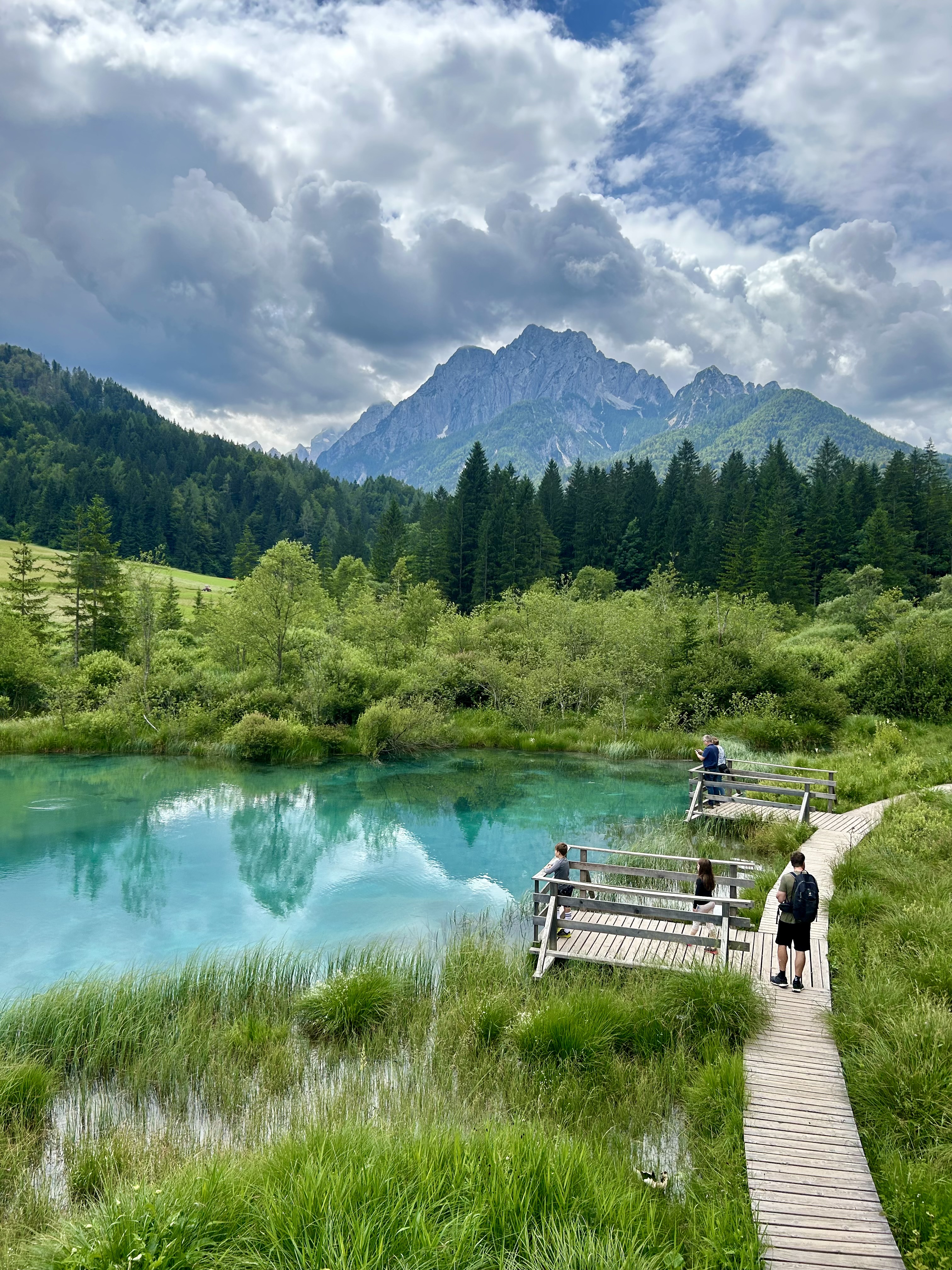
First to Zelenci, where the Sava Dolinka river starts. Emerald pools bubbling up through a small wetland area. Wooden walkways across the marsh.
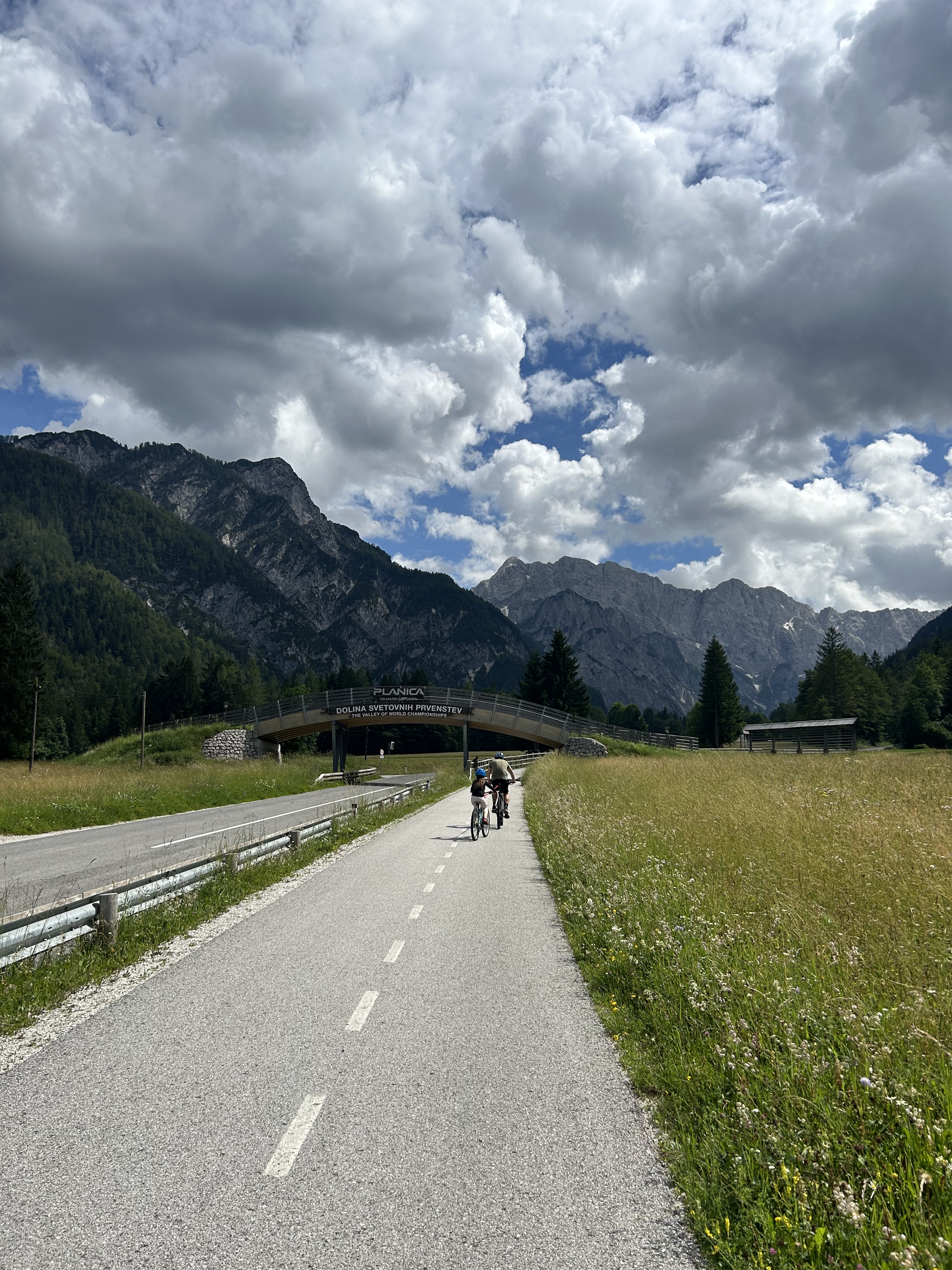
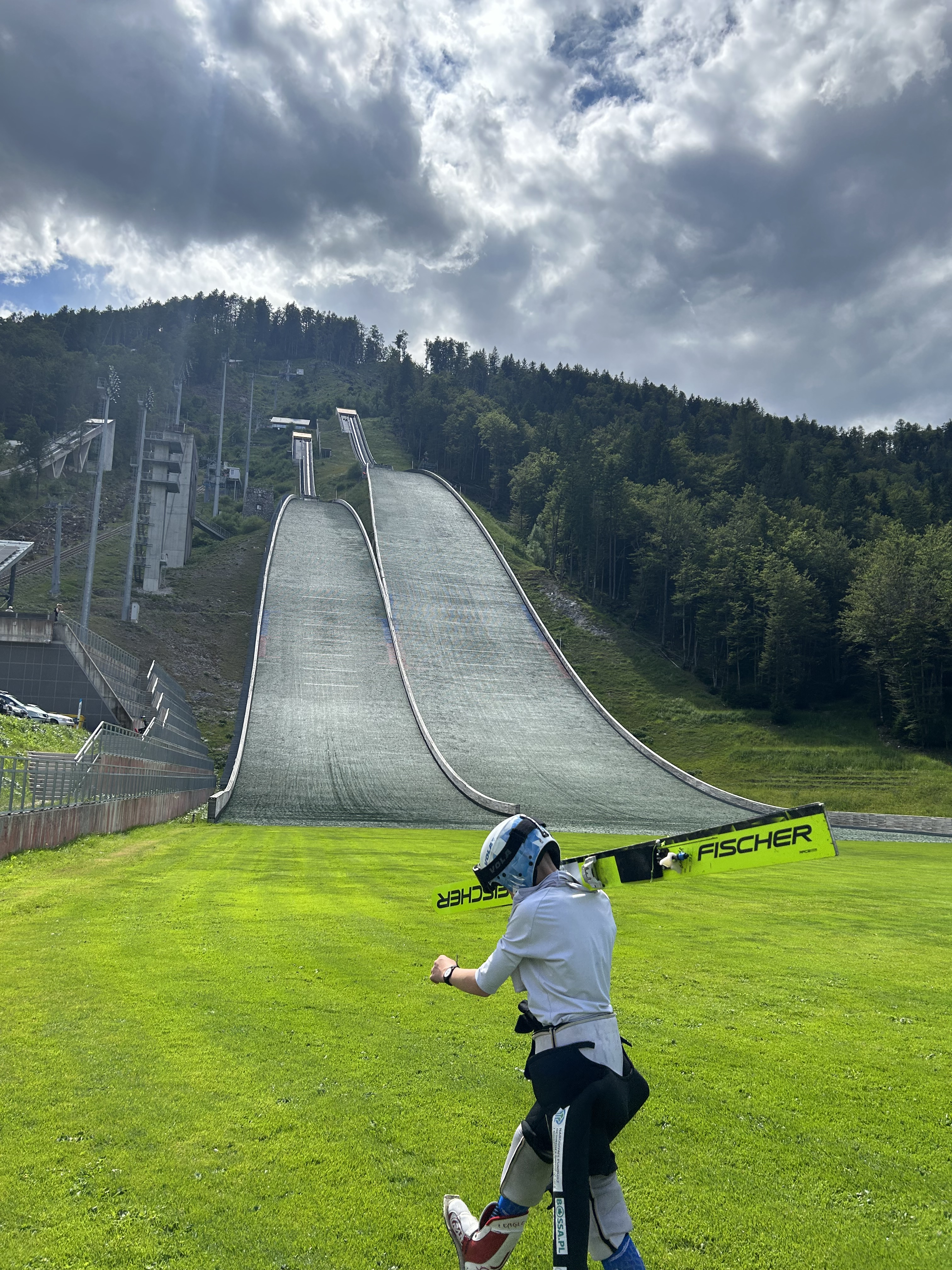
A few kilometres further the valley opens toward Planica.
The road climbs steadily toward the ski jumping centre.
Even in summer there are jumpers training. They slide down the ramp and land far below on the grass.
From Kranjska Gora the road climbs higher. Fifty hairpin turns cut into the mountainside. Motorcyclists pass through the bends. Cyclists without motors work their way up slowly.
On 1611 meter: Vrsic Pass. the highest Road Pass in Slovenia.
At the top the wind picks up. Windproof jackets and extra layers go on.
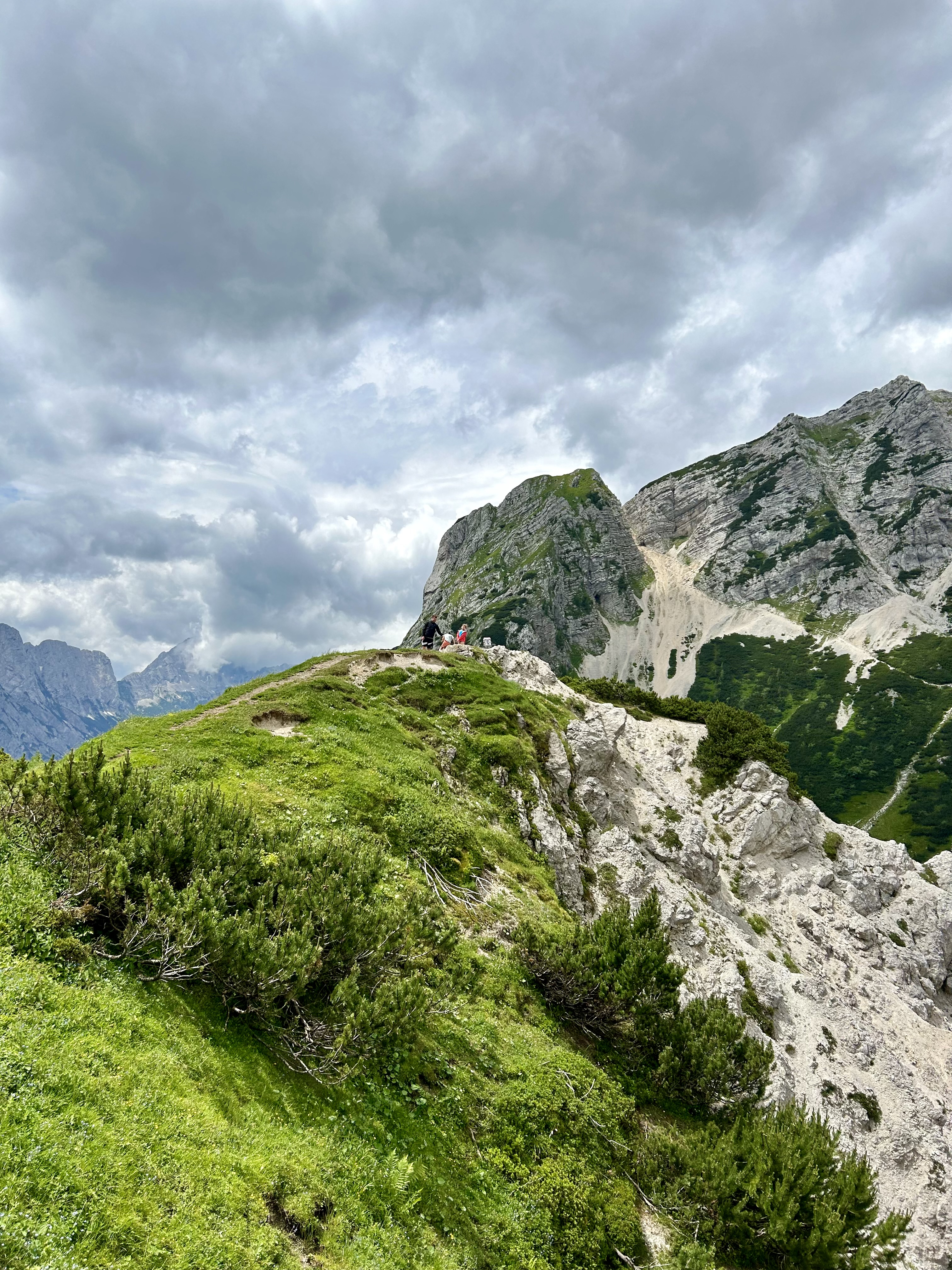
Several hikes start from the pass. We choose One of the really short ones. The sign says fifteen minutes. small feet take longer. On the top a book waits for visitors to write their names.
the road drops into the Soča Valley.
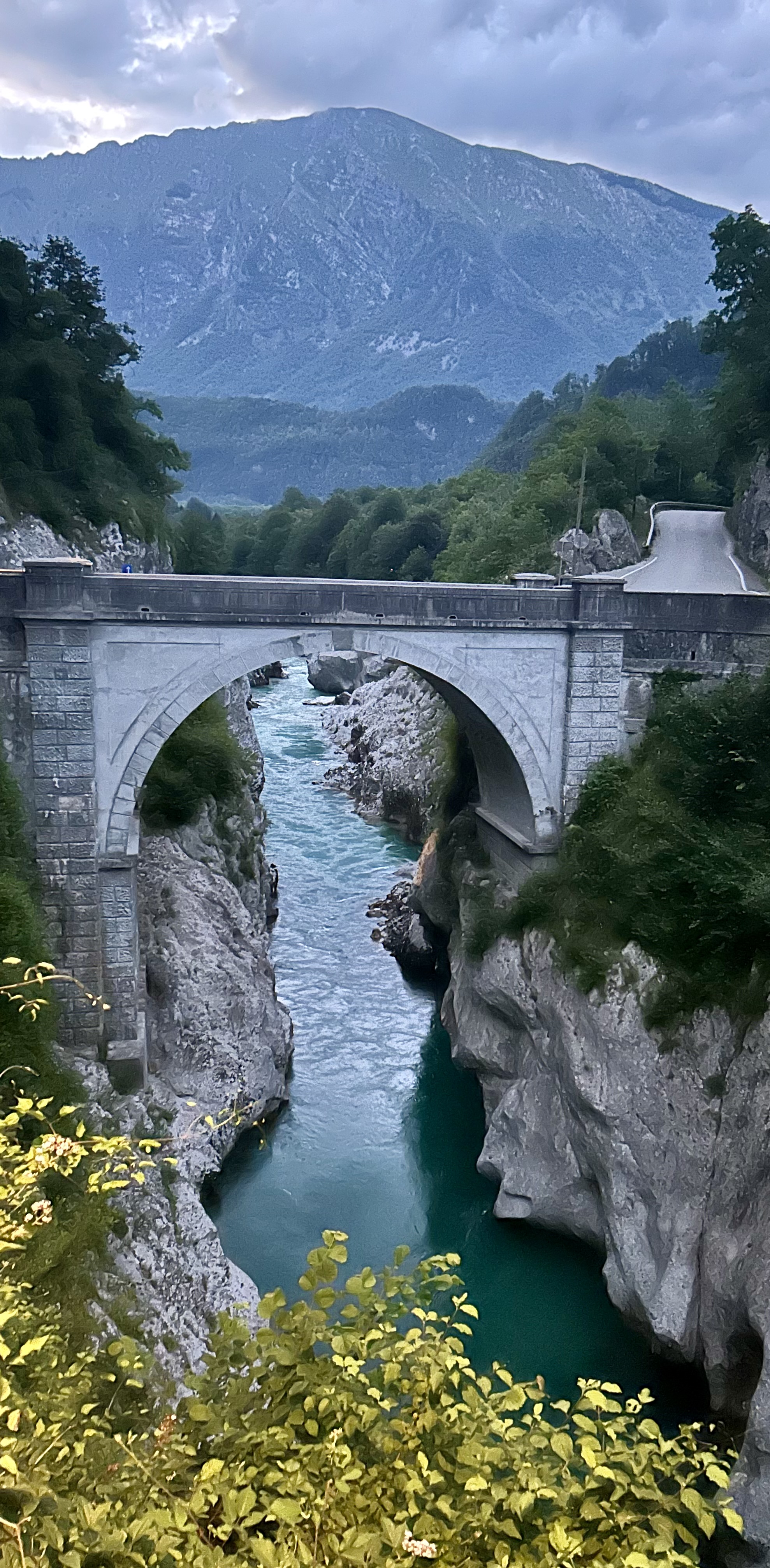
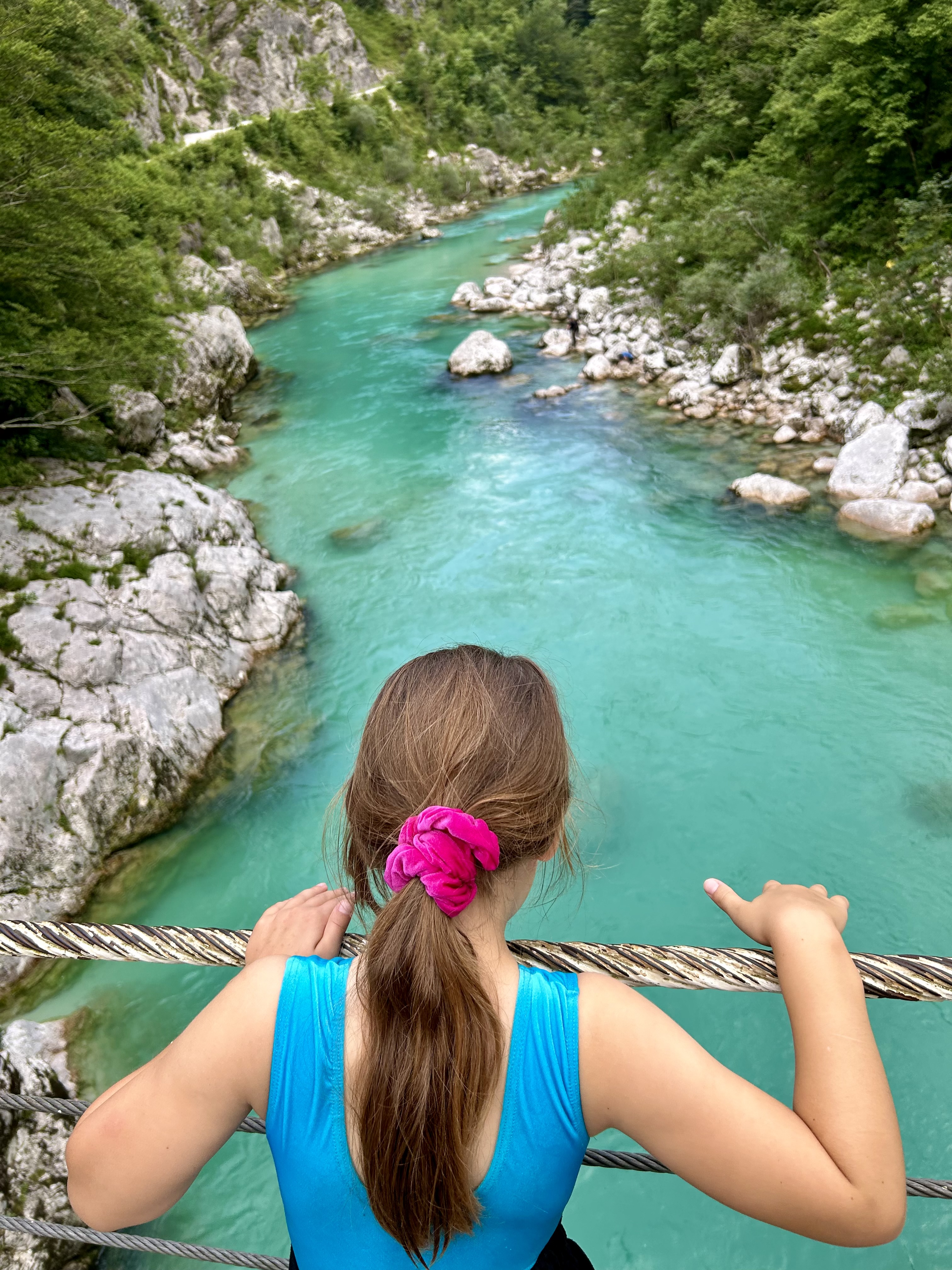
The emerald river is well-known for rafting. a stone arch Bridge, from 1750, crossed by Napoleon’s troops on their march toward the Predel Pass, spans the narrow gorge.
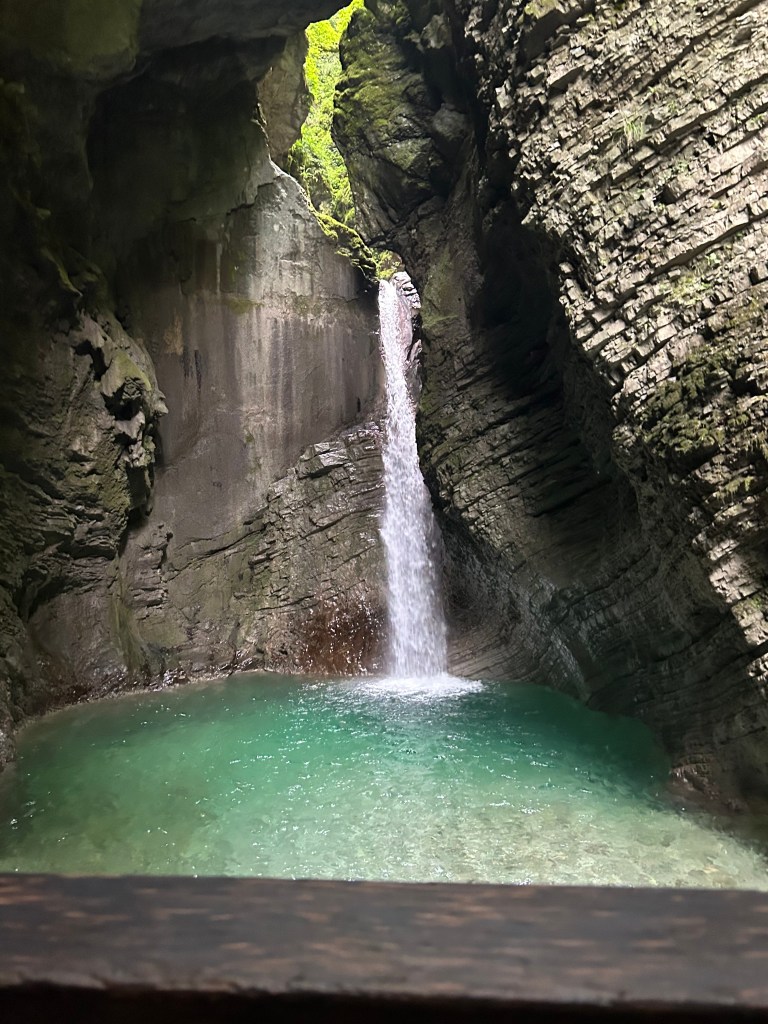
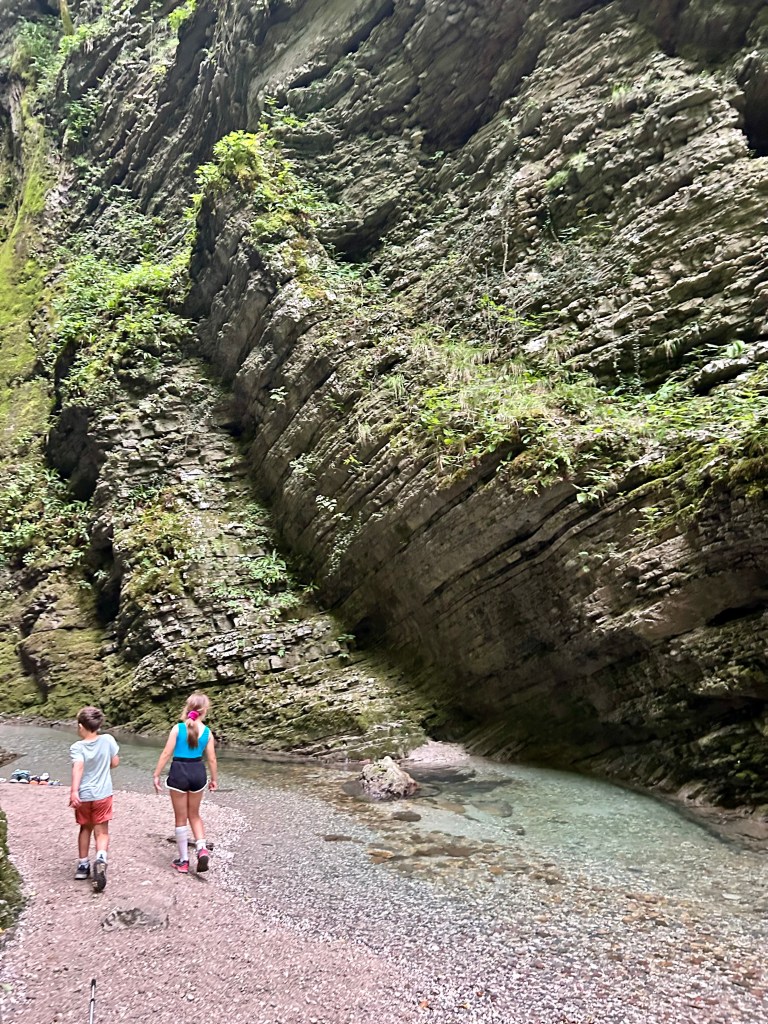
Near the little town Kobarid, is also the Kozjak Waterfall. A trail follows the gorge through forest and across wooden bridges. To us the walk in turns out to be more interesting than the waterfall itself.
 GoBreezing